Monday, January 24, 2011

Bold Bordeaux


Hello Wine Lovers!

Now that the excitement of the Bears is over and everyone has drowned their disappointment and their tears in their favorite beverage of choice... lets talk about a super buy on a French Bordeaux from Chateau Roc de Levraut! This wine sells for, are you ready for this, $5.99 at the Wine Discount Center! Let's face it, if you don't like it, just pour it in your car's windshield fluid container and call it a day! This is a classic example of a French Bordeaux with a blend of 50% Cabernet, 40% Merlot and 10% Cabernet Franc. You will find it earthy with flavors of cassis and blackberry with just a hint of tobacco notes and a slightly tannic finish with just enough oak to keep it interesting. I purchased this wine with no real big expectations but I figured if it was good enough to write about on this blog I would do so. Twenty minutes later... I was blown away! This will not be your best wine of the year, but it certainly can';t be beat for the money!

Until next time...Drink More Wine!
Cheers!
J

Sunday, January 9, 2011

Nice Cabernet


Hello Wine Lovers!
I still can't believe it is 2011... time flies when your drinking wine! My entry for today is a inexpensive California Cabernet that i think you will find most enjoyable for the money. The McManis Family Vineyards Cabernet. This can be purchased at your friendly neighborhood Binny's for around $9.99, a steal if i ever saw one. You will find this wine purple-red in color, and the nose is filled with chocolate and caramel, more than likely from the oak aging. The round creamy mouthfeel is accompanied by dark fruit flavors with a long soft finish. They also make a Merlot that is a dollar less and will be a topic of a future blog. Now a little about the vineyard.

McManis Family Vineyards is a grower and vintner of premium varietal winegrapes located in the Northern Interior of California. The company was founded in 1990 by Ron and Jamie McManis - fourth generation family farmers. The McManis family has been growing grapes in this region since 1938.
They currently operate over 2500 acres of winegrapes, and after the 1997 harvest, a state-of-the-art winery was designed and built to maximize the resulting wine's quality through small lot handling, whole cluster pressing and barrel storage and fermentation. By keeping the lots small, we really can do a number of setups," Jeff says. "We can treat each tank differently with regard to yeast, fermentation, temperature, and oak. We've built as much flexibility as we can into each individual element of the process."
McManis Family Vineyards' President, Ron McManis, says, "The benefit of having three winemakers on staff is that there is always someone here to look after the wines. If they have concerns about a batch of wine, our staff has someone they can discuss the problems with and help them both understand and reach a solution."
I feel after you open a bottle of their wines... you will agree!
Cheers
J

Friday, December 31, 2010

2011 Is Here!


Hello Wine Lovers!
I can't believe 2011 is here already. It seems just like yesterday 2010 opened up the year with everyone a little on edge. Lets face it, the economy hasn't exactly been stellar, unemployment is at an all time high, and oil prices keep rising and costing us all more at the pump! That being said, lets all look to a brighter 2011 and lots of exciting wine to drink and explore. I am writing about Korbel Sparkling Chardonnay today with New Year's Eve upon us. At $8.99 a bottle and the clean crisp taste of 100% Chardonnay, you can't go wrong with this beauty. You will find this wine, not only a great opening to your party or dinner, but also a nice accompaniment to your dinner. In other words, it will stand up to food. A little history of Korbel for you to sound wine savvy with your friends...

Korbel Winery was established by Bohemia-born Francis Korbel and his brothers, Joseph and Anton, in 1882 and is the oldest continually operating champagne house in North America.During the late 1870s, the Korbels harvested prunes, beets, wheat, corn and alfalfa, and operated a commercial dairy. During this time, they planted their first vineyards and began experimenting with different grape varieties, including Pinot Noir – early evidence of the Korbels’ ambition to become champagne producers. Pinot Noir was an unusual variety for California; it was known primarily as the principal grape of the Champagne region of France. In 1882, the three brothers began a small wine-making operation at their ranch and produced some 20,000 to 30,000 gallons of wine from their vineyard yields. KORBEL wines were so well received that two years later the brothers closed their dairy, converted all of their ranch lands to vineyards, and devoted all of their energy to wine-making. A tradition that was to become a legacy was well under way.The Korbel Winery continued to grow throughout the 1880s. It was during this time that the Korbels sent for winemaker Frank Hasek in Prague to come to the United States to be their champagne master. Employing the time-honored French method of producing champagne, méthode champenoise, the Korbels quietly but aggressively experimented with cuvées. By the mid-1890s, the Korbels shipped their first California champagnes, and by the turn of the century KORBEL was an internationally known, award-winning label.Taking advantage of Sonoma County's ability to produce high-quality pinot noir and chardonnay grapes, Adolf introduced KORBEL Natural', KORBEL Blanc de Blancs (100% chardonnay) and KORBEL Blanc de Noirs (100% pinot noir) – all of which he created using champagne yeasts he had developed himself. KORBEL. It is a name that tells the unique story of two families – their dreams, determination and dedication – and it is a name that stands for over 125 years of fine méthode champenoise California champagnes.
All KORBEL champagnes are made according to the traditional méthode champenoise technique, where the champagne is fermented inside the same bottle from which it is served. This time-honored process takes almost a year to complete. But the results are worth the wait. The taste of the méthode champenoise style is famous for its delicate nuances along with producing the countless streams of dazzling bubbles in every glass of KORBEL California Champagne.
The next time you come across a display in your local wine shop or supermarket, pick one up, you won't be disappointed!
Happy New Year!
Cheers!
J

Thursday, December 23, 2010

Paso Robles Cabernet


Hello Wine Lovers!
Happy Holidays!
Lets talk Caberent

Today I am going to talk Cabernet. As I’m quite sure most of you know to find a decent Cabernet at a decent price is no small feat. Today’s entry will surprise the heck out of you… Castle Rock Paso Robles Cabernet for around $10 a bottle. (They also make a Nape Cabernet that is a little more $) You will find this wine full of blackberry, cassis and tobacco flavors with a slightly tannic finish. Very complex and soft for a wine at this cost point!
Let’s talk a little about this wine growing region. The California region of Paso Robles has been producing some wonderful wines as of late and their quality continues to rival Napa Valley but for a lot less money. The cost per acre is more than half the price of Napa and many young upstart wine makers have decided to call this area home. Located about half way between Los Angeles and San Francisco in what California calls “Central Coast” with elevation from 600 feet to 1100 feet above sea level. Grapes were first introduced to this area in 1797 by the Spanish and Franciscan Missionaries. New wineries have sprung up as well as investing in old wineries to bring them up to par with modern techniques and equipment. There are more than 250 wineries planting over 25 different grape varietals in the region. There has been many replanting of vineyards and now the two most prominent grapes planted there is Cabernet and Zinfandel. The region does not get quite as hot as Napa and the nights are cooler and longer which keep the grapes plump and juicy. Generally speaking, the wines are slightly more soft and approachable than wines from Napa… not to take anything away from Napa wines. Some people will say Napa Cabernet is some of the best in the world, and I certainly will not argue this point, but I believe Paso Robles is right on their heels! Look at the labels of the different Cabernets you come across in your favorite wine shop, when you see Paso Robles I don’t think you will be disappointed!
Cheers!
J

Saturday, December 18, 2010

Spanish Red


Hello Wine Lovers!


Sorry for the delay in my latest post but the holidays has taken it's toll on my time to write with all the parties and get togethers with family and friends has left little time. As everyone gets their shopping finished, their cards sent out, and their presents wrapped be sure and take the time to lite a fire in the fireplace and relax with this little number. Bodegas de Murcia, Caracol Serrano, from the Jumilla Region of Spain. This wine is deep purple in color with lots of dark berries and a touch of licorice and spices on the long smooth finish. This wine drinks like it is $20 a bottle and will only set you back about $8, which leaves plenty of money to spend on your shopping!


By the way, Bodegas simply is the same as Chateau would be used in French wines. Don't let the name scare you, go into your favorite shop and ask for Caracol Serrano from Spain. If the guy (or gal) looks at you like your crazy... you have the wrong shop!


Have Fun!


Cheers!


J

Sunday, November 21, 2010

Champagne for Turkey


Hello Wine Lovers!


After my rant about restaurant wine service last week I thought I better get something in here for you to enjoy with the upcoming holidays! Champagne or Sparkling or Cava in this case.


Lets talk a little about Sparkling wines. Out of respect for the French, you only call Sparkling wines made in the Methode Champenoise from the Champagne Region of France... Champagne. What is this Methode Champenoise you ask? Glad you asked! I'll make it as short as possible. In a nut shell it is the traditional way to make sparkling wines where there is yeast added to the bottle for a second fermentation. The yeast works with the sugars and makes the "Fizz" or bubbles in the bottle. When the wine is ready to go to market, the yeast is collected in the neck of the bottle and taken out. Champagnes are aged in the bottle for anywhere from 1 to 5 years. This will allow the wine to mature and have many layers of flavor and depth. Just so you know, Brut is the dry champagne and Extra Dry is actually sweet. I have included a picture to help you understand how it is made.


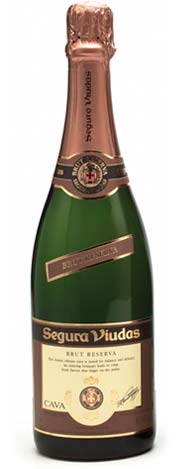
Now the wines! Segura Viudas Aria Brut, Spain, for about $8 a bottle will knock your socks off! This wine is clean and crisp with just a note of apple on the nose and a long smooth finish. This will impress any sparkling wine drinker.


The next entry is also from Spain and it is even less expensive! Cristalino Brut, about $7 a bottle! This wine is also more impressive than it's price tag. It has dried flowers on the nose with orange peel and apple in the mouth. It finishes with just a touch of sweetness. Now of course if you would like, you could bring a 2002 Dom Perignon, which was given 96 points, to your next party. It will set you back about $150 a bottle... you decide!


Cheers!


J

Sunday, November 14, 2010

Restaurant Wine


Hello Wine Lovers!

Today I am going to vent about one of my pet-peeves... shabby restaurant wine service.

I'm sure I can't be the only person that feels this way, so to all of us out there... strap yourself in and here we go!

I choose a restaurant to visit as much for their wine list as their menu. I refuse to have dinner without good wine, they go hand in hand, in my book you just can't do it. So... the wine list looks good, the menu appears to be good, the decor is inviting, the staff sharp, the music is perfect, the lighting is romantic, we're all set. I choose a bottle of wine and then it happens, it begins to fall apart! The waiter comes back to the table embarrassed to say the restaurant is out of the wine I ordered and please select another. So now that I had my mind set on that particular wine I have to change my thoughts to something different. OK, the next bottle is selected and the waiter brings it to the table with what someone considers to be wine glasses (certainly not me) and shows me the bottle, I approve and it is opened and a taste is poured for me to check. I don't understand how someone goes to all the trouble to put a respectable wine list together and then screws it all up by choosing sub par wine glasses. The glass is as important as the wine! I swirl the wine and put my nose in the glass... and it's corked! Can't drink it, it's bad. The next big mistake is about to happen... I tell the waiter the wine is "corked" and to please bring another one. He looks at me like I have 2 heads with this total dumb founded blank look on his face and says"I don't see any cork in the glass" which at that point I want to leave and go somewhere else to spend my money! Educate your staff! Inform and teach, it is an on going process if you want to have a successful wine program. So at that point usually a manager type will come by the table and also with a blank look on his or her face say something stupid that has nothing to do with a corked wine and then another bottle shows up. (A corked wine is from a fungus that grows in the cork and then destroys the wine... a later blog) We go through the same steps and I approve the wine... next mistake and my least favorite of all, wine is served at the wrong temperature! I really dislike red wine too hot or white wine too cold! Again, you go through all the trouble to put a wine list together and the don't bother to serve it correctly! Red wine should be served at "cellar" temperature, around 54 degrees and white wine should be served at around 44 degrees, unless of course it is champagne and that should be cold! Too cold on whites kills the flavors and too warm on reds disguises the flavors. If you don't have proper wine storage at home use the 20 minute rule. Take a white out of the refrigerator for 20 minutes and put a red in the fridge for 20 minutes before drinking them. This will just about put them at the correct temp! The next big mistake... the waiter pours way too much in the glass! Just a bit, leave room for the bouquet to work it's magic, breath and grow and swirl. Again, educate the staff. All in all most restaurants get most of it correct with one exception, the temp.

That is why I dine at home and if there is anything wrong with the wine service there, I am the one to blame!

I feel better now that I have that of my chest... thanks for listening.


Cheers

J